Hybridisation in Organic Chemistry
Rubayat Ahmed | Jayesh Pillai
Project Overview
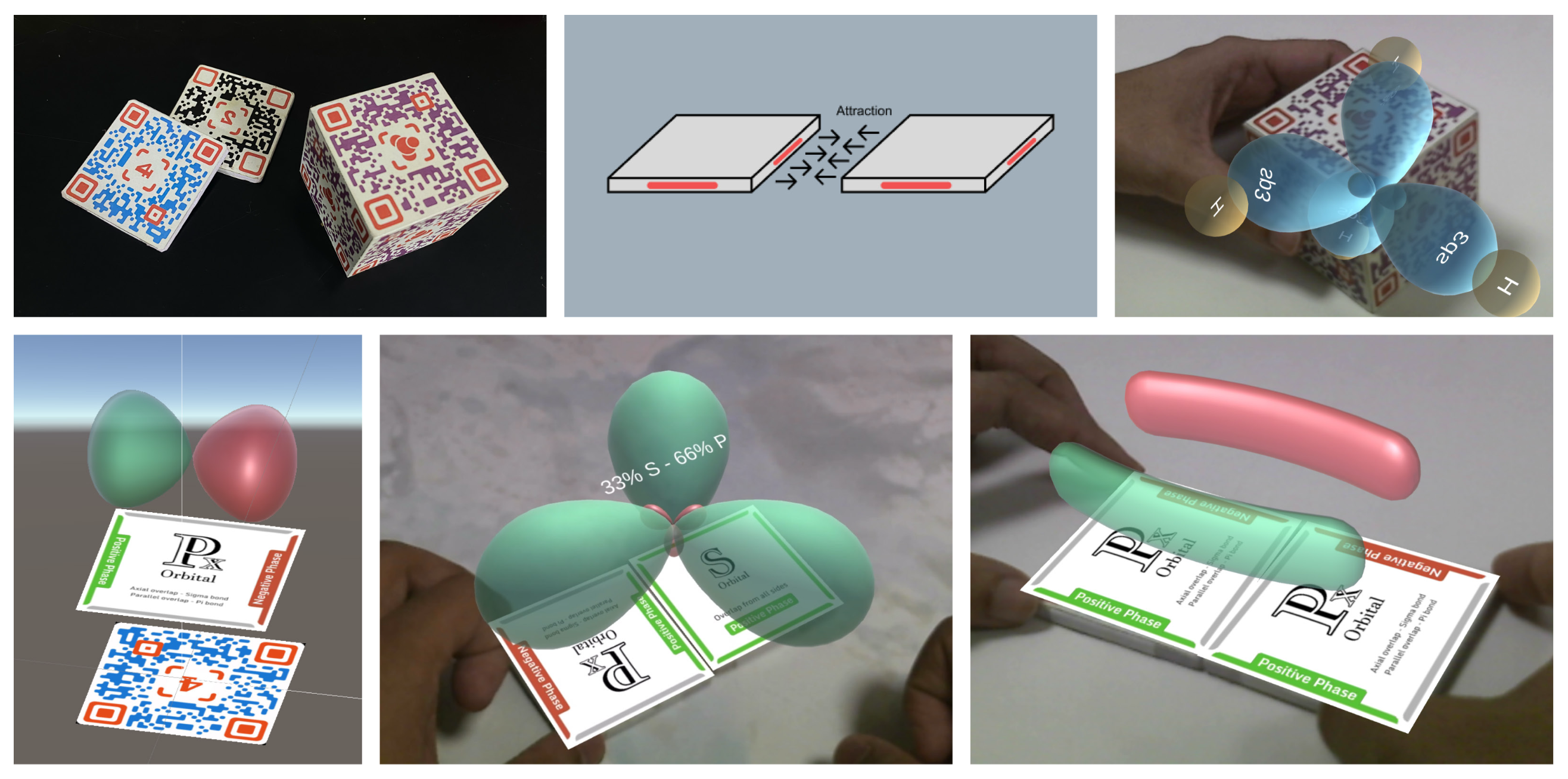
Hybridisation in organic chemistry is an AR-based learning prototype that enables students to understand the concept of orbital hybridisation intuitively through marker-based AR and to explore the effectiveness of AR in science education.
In organic chemistry, orbitals are three-dimensional regions around the nucleus where electrons are most likely to be found. The primary atomic orbitals: s, p, d, and f; combine through a process known as hybridisation, forming new orbitals with distinct shapes, orientations, and energy levels.
Concept
Students often struggle to visualise these abstract 3D structures using traditional teaching methods such as textbook diagrams or chalkboard drawings. This leads to misconceptions related to orbital orientation, phase, nodes, and spatial arrangement, which are critical to understanding molecular geometry and bonding.
Augmented Reality (AR) is a technology that overlays digital content onto the real-world environment using mobile or wearable devices. AR has strong potential in education, especially for subjects that demand high spatial visualisation ability, such as chemistry. With the widespread availability of Android smartphones in India, AR presents an accessible and affordable learning medium. This project uses marker-based AR, in which physical markers are tracked using a mobile camera to display interactive 3D orbital models in real space.
Design Approach
The design process focused on addressing specific student misconceptions related to orbital hybridisation. Key design decisions included:
- Narrowing topics based on known learning difficulties
- Designing a guided booklet with AR instructions
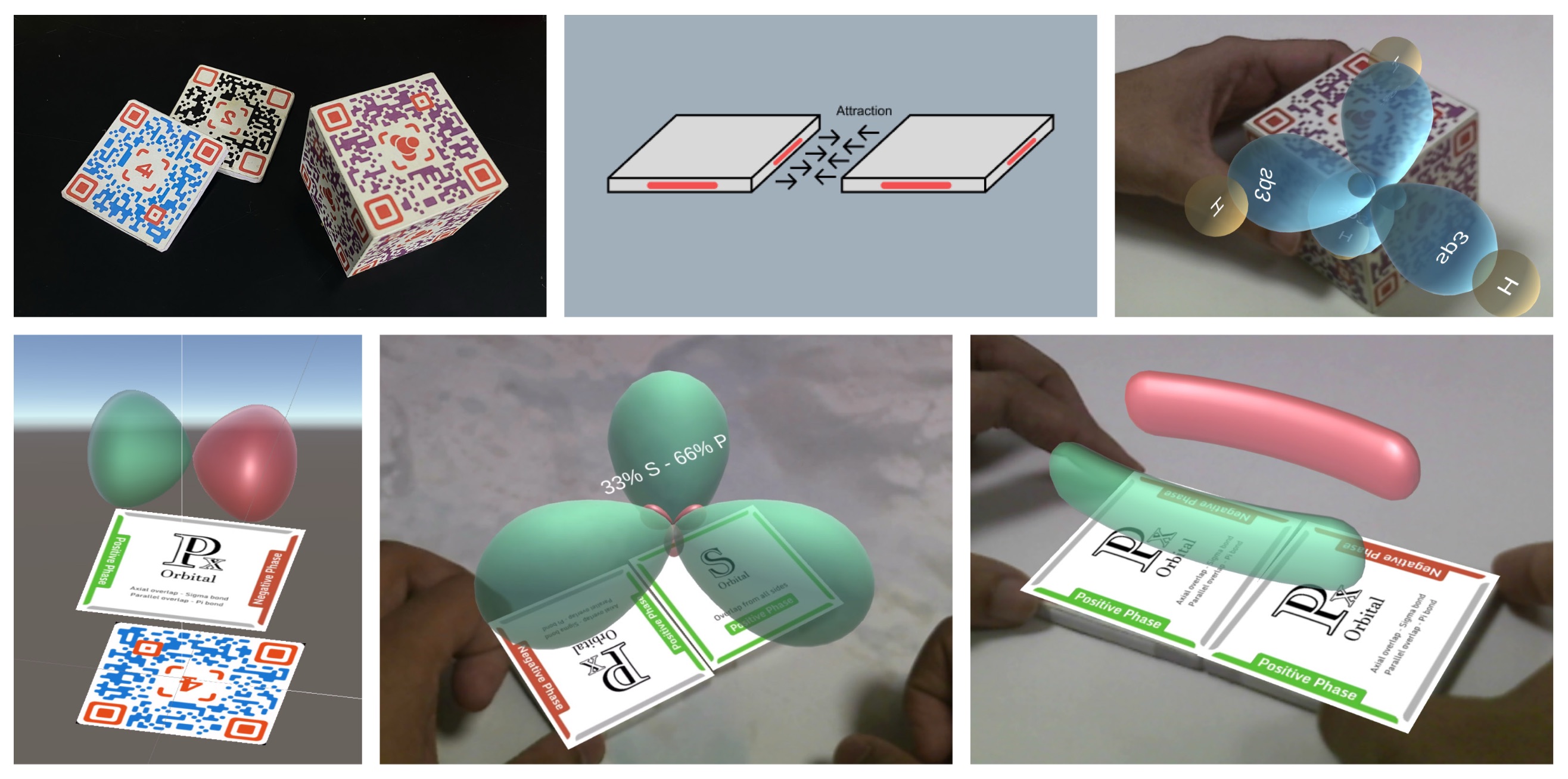
- Using a combination of plane and cube markers
- Introducing magnets for haptic feedback
- Reducing the number of physical markers by switching AR scenes based on sub-topics
- Replacing QR-code markers with virtual information markers that describe the displayed orbital
- Providing minimal but effective on-screen textual guidance
These interventions aimed to make interaction intuitive while maintaining conceptual clarity.
Outcome
The prototype was evaluated with students who already had prior knowledge of organic chemistry. Students reported:
- Improved conceptual clarity about orbital phase, node formation and p-orbital orientation.
- High engagement, interest and positive learning impact due to interactive learning using 3D markers.
The evaluation demonstrated that AR can be an effective and usable medium for teaching complex scientific concepts in school education.