Blind Justice
Laksh Rajpal | Guided by Prof. Jayesh Pillai

Abstract
Voice is one of the most natural and expressive human abilities, yet in most digital systems, it is reduced to rigid, efficiency-driven commands. In immersive media like Virtual Reality, interaction remains largely visual, overlooking the emotional and spatial potential of sound.
Blind Justice explores voice as a primary interaction modality, not just as input, but as a narrative and spatial force. Through spoken cues, loudness, and vocal intent, voice guides characters, shapes environments, and creates tension. Rather than prioritising recognition accuracy, the project focuses on atmospheric and relational uses of sound to drive experience and story.
Background
Most existing voice-based systems prioritise command execution, pitch detection, or transcription accuracy. While technically efficient, these systems rarely engage with the emotional, cultural, and behavioural dimensions of voice. Historically, however, voice has been central to play and interaction, ranging from early mechanical toys responding to resonance to voice-controlled games, karaoke, and culturally embedded sound-play traditions. These precedents reveal that voice is inherently social, embodied, and expressive. Despite this, VR and AR experiences still rely predominantly on vision, leaving the spatial possibilities of voice underexplored. Blind Justice seeks to bridge this gap by placing voice at the centre of navigation, decision-making, and narrative tension.
Motivation
The project is motivated by a belief that voice can reduce interaction barriers while increasing emotional engagement. Unlike controllers or gestures, voice allows users to respond instinctively, without learning complex interfaces. Personal observations of sound-based toys, games, and social play revealed how vocal expression changes depending on comfort, context, and system response. These insights shaped the desire to design a VR experience where speaking feels meaningful, justified, and emotionally grounded, rather than awkward or mechanical. The project also responds to a broader need for empathetic interaction design, where users feel connected to characters and consequences, not just mechanics.
Understanding the Problem Space
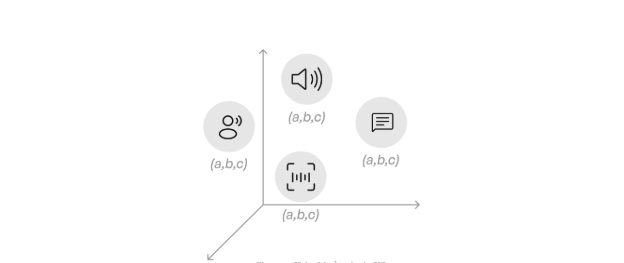
Secondary research examined voice-based games across multiple decades, identifying four dominant categories of voice interaction:
- Volume detection
- Pitch and rhythm
- Voice commands
- Conversational dialogue
These mechanics have been used for navigation, combat, puzzle solving, companionship, and narrative progression. However, most applications treat voice as detached from space, ignoring how sound naturally carries direction, distance, and intent. Cultural practices, such as guiding blindfolded players through sound cues, demonstrate how voice has long been used for navigation, trust-building, and spatial awareness, offering valuable insight for immersive interaction design.
Hands-On Exploration
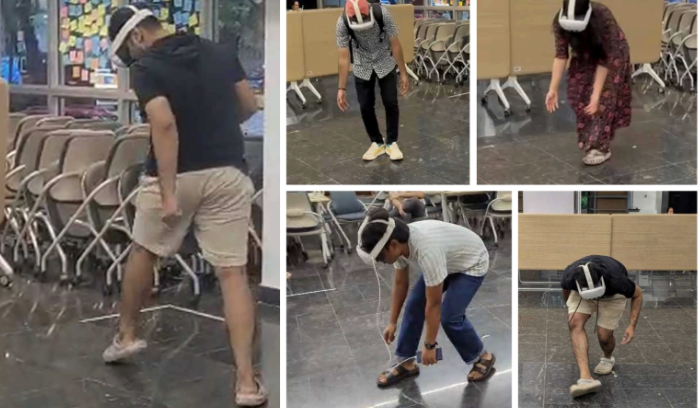
To ground the research, an earlier VR prototype explored volume-based interaction in a spatial environment. In this experiment, players used loudness to influence the movement of virtual characters, revealing how sound becomes more expressive when mapped into 3D space.
Participants instinctively leaned, gestured, and modulated their voices, showing that voice interaction is inherently embodied. Social context also played a role, players were more playful and expressive when interacting with friends. These observations validated the idea that ambiguity in voice input can encourage creativity, rather than confusion.
Scoping the Project
Given practical constraints, the project focused on two voice mechanics:
- Voice commands for intentional control
- Volume-based interaction for expressive, spatial influence
Pitch-based and conversational systems were excluded due to technical complexity and accessibility concerns. This scoping ensured that the experience remained feasible while still exploring meaningful vocal interaction.
Narrative Direction
Multiple narrative concepts were explored, but one stood out for its emotional and experiential depth: guiding a blind character using voice.
This direction naturally justified sound as the primary interaction channel. It framed the player not as a controller, but as a companion and guide, creating a relationship built on trust, responsibility, and empathy.
The Story: Blind Justice
The narrative revolves around two characters:
Raju, a genuinely blind man
Shyamlal, a fake blind beggar who exploits public sympathy
Raju witnesses Shyamlal deceiving people and decides to recover the stolen money. To do so, he enters Shyamlal’s house, an unfamiliar and dangerous space. The player assumes the role of Raju’s unseen guide, using voice commands to navigate him safely, while using loud sounds to distract Shyamlal. The goal is to retrieve valuables and escape without being caught. This setup transforms voice into a lifeline, embedding interaction directly into the emotional and ethical stakes of the story.
Game Mechanics
Dual-Character Interaction
The experience is built around two contrasting behaviours:
- Raju (ally) responds to precise voice commands like go, stop, and steal
- Shyamlal (antagonist) reacts instinctively to loud sounds This creates a dynamic loop where the player must coordinate guidance and misdirection simultaneously.
Spatial Distraction System
Shyamlal’s attention can be redirected using volume-based sounds placed strategically within the house. Loud noises near objects such as a TV or doorway cause him to investigate that area, opening safe paths for Raju. Sound becomes a spatial strategy, not just an input.
Stealing, Timer , and Progression
Collectible money bundles are scattered throughout the house. Stealing requires proximity and a vocal command, increasing risk and tension. A countdown timer creates urgency, while scoring rewards for calculated risk-taking. As time runs out, Shyamlal becomes more aggressive, triggering the endgame phase.
Prototype
A functional VR prototype was developed in Unity to test the complete interaction loop. The experience unfolds inside a semi-transparent miniature house, allowing players to observe character movement without excessive physical repositioning. The prototype demonstrated the feasibility of integrating:
- Voice commands
- Volume-based spatial sound
- AI-driven character behaviour
- Narrative tension
Gameplay footage is available via a linked video in the original report
Technical Challenges
Major challenges included:
- Reliable detection of short voice commands
- Simultaneous processing of voice commands and volume input
- Natural character navigation within a complex space
These were addressed through custom audio pipelines, AI-based navigation systems, and iterative refinement of interaction feedback.
Design Detailing
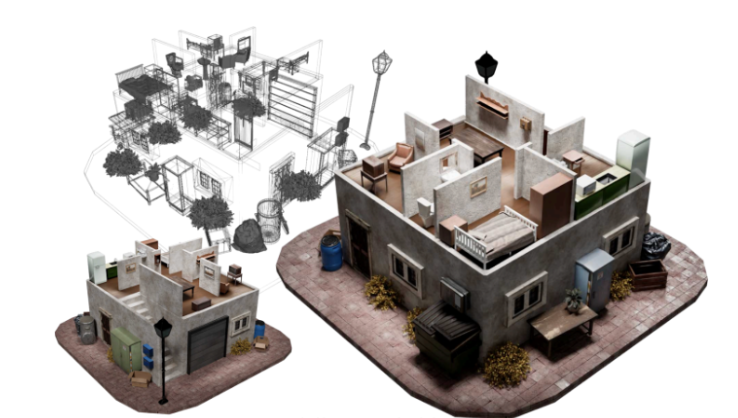
A high-fidelity environment was later developed in Blender to explore atmosphere and storytelling through space. The house was designed as a worn, modest dwelling, reinforcing themes of secrecy and tension.
Due to performance constraints, only the core structural elements were imported into Unity, prioritising interaction over visual complexity.
Conclusion
Blind Justice demonstrates how voice can function as a meaningful, embodied interaction medium in VR. By grounding vocal interaction within a narrative of trust, vulnerability, and moral tension, the project moves beyond command-based systems toward emotionally resonant design. The work highlights the potential of sound-first interaction in immersive environments and opens avenues for future exploration in accessibility-driven and narrative-centric XR experiences.