Cratering in Lonar
Anoushka Shome | Jayesh Pillai
Project Overview
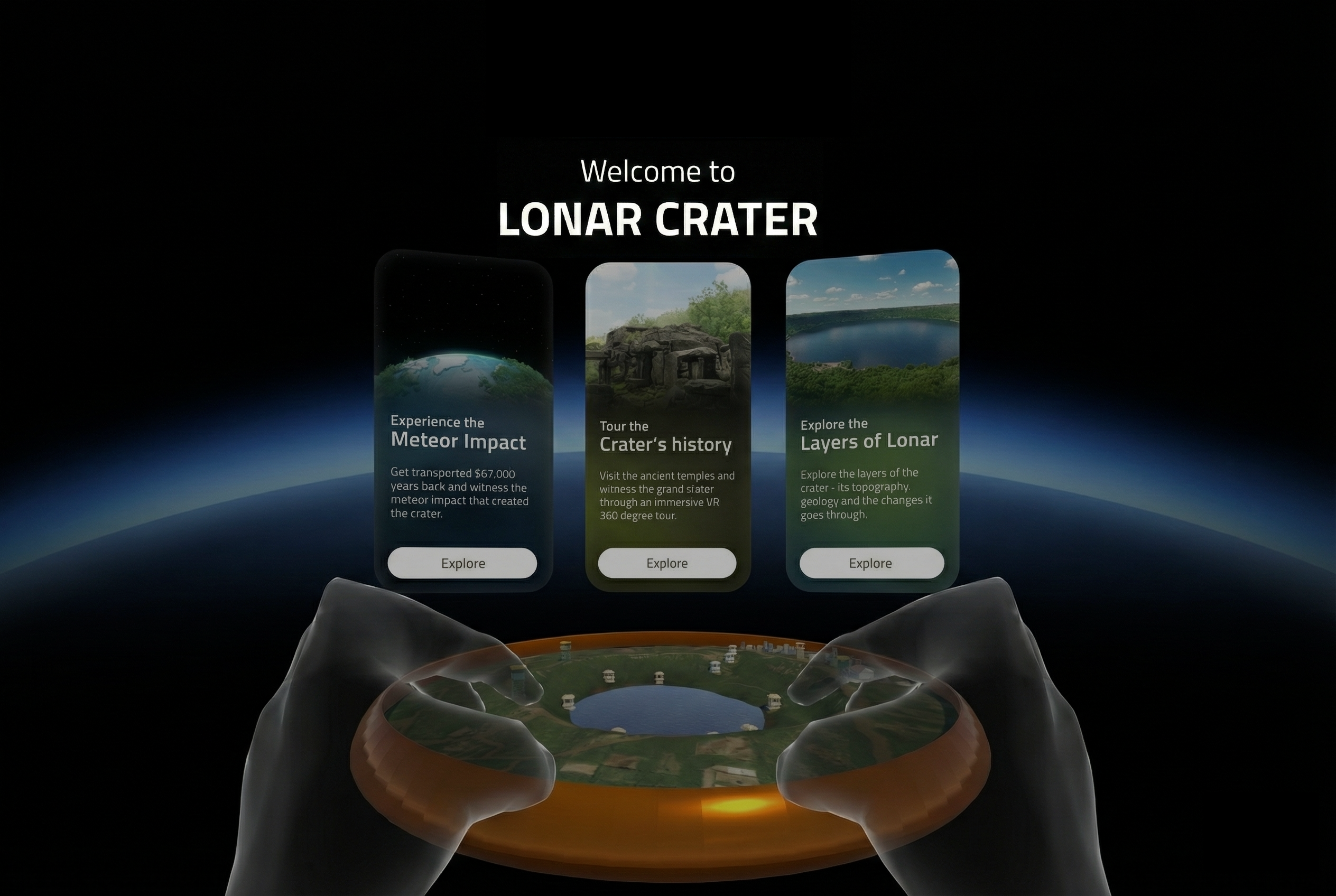
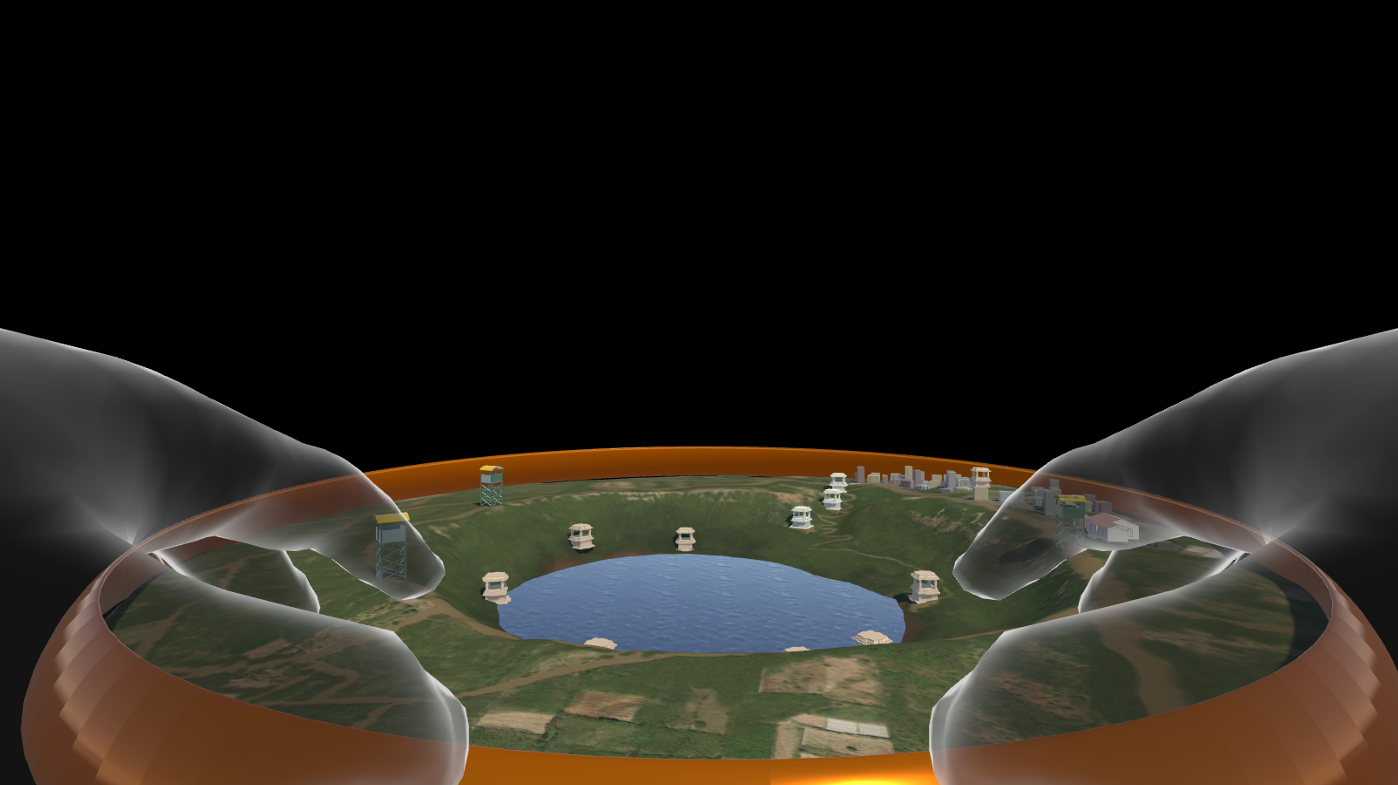
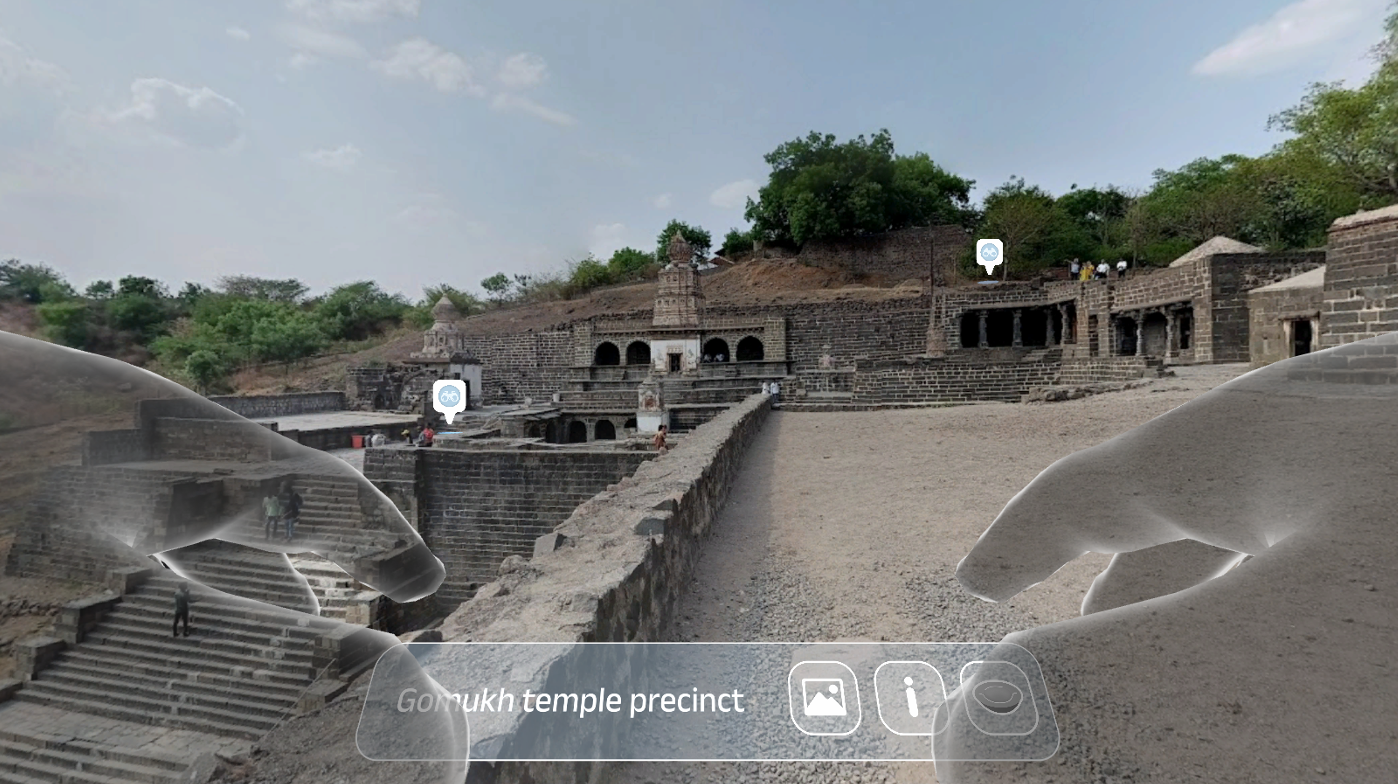
Lonar Crater is one of the world’s few meteor impact craters formed in basalt rock, holding geological, ecological, and cultural significance. Despite its scientific importance and living heritage, it remains underrepresented in public understanding and engagement. This project explores how XR technologies can translate complex, layered knowledge into accessible and immersive public experiences, particularly in a museum or experience centre context.
Design Approach
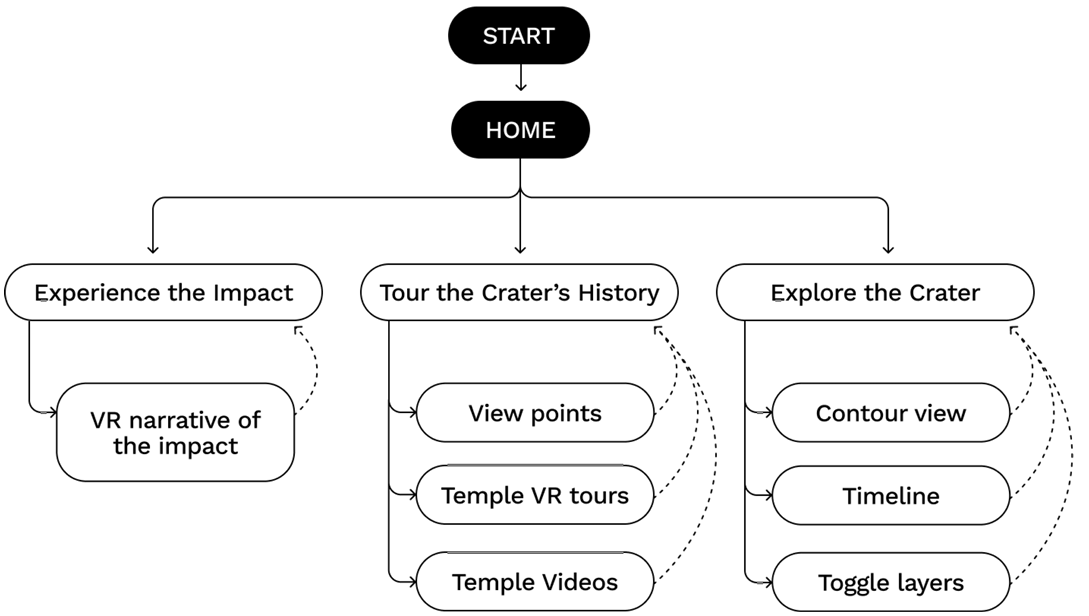
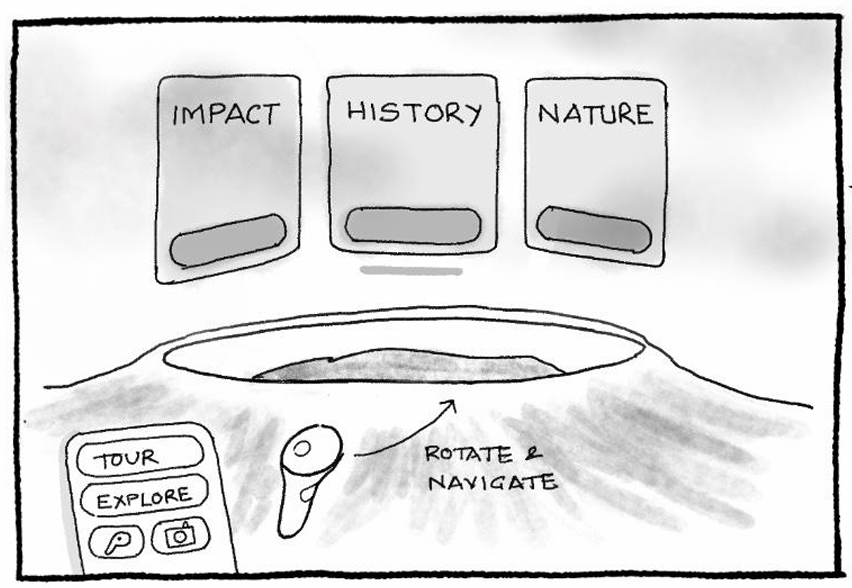
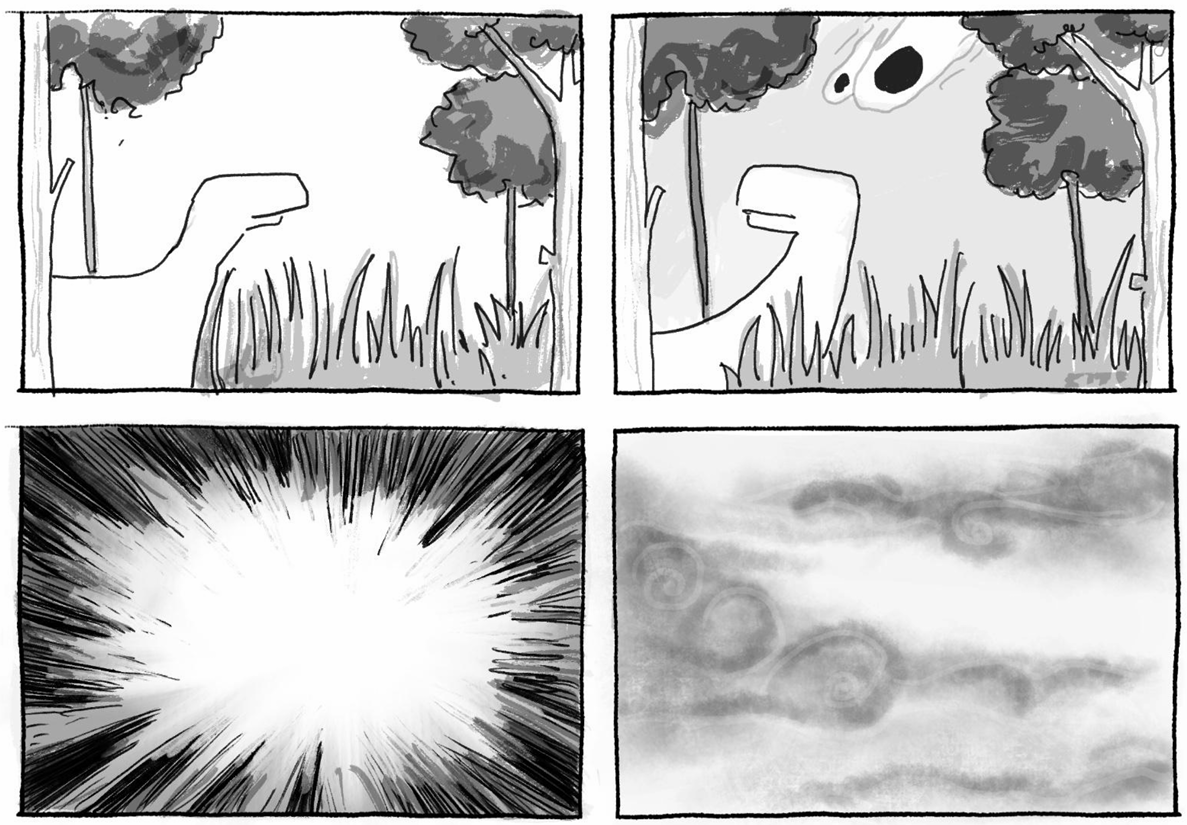
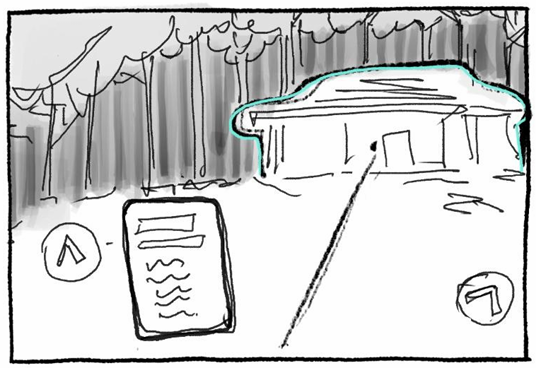
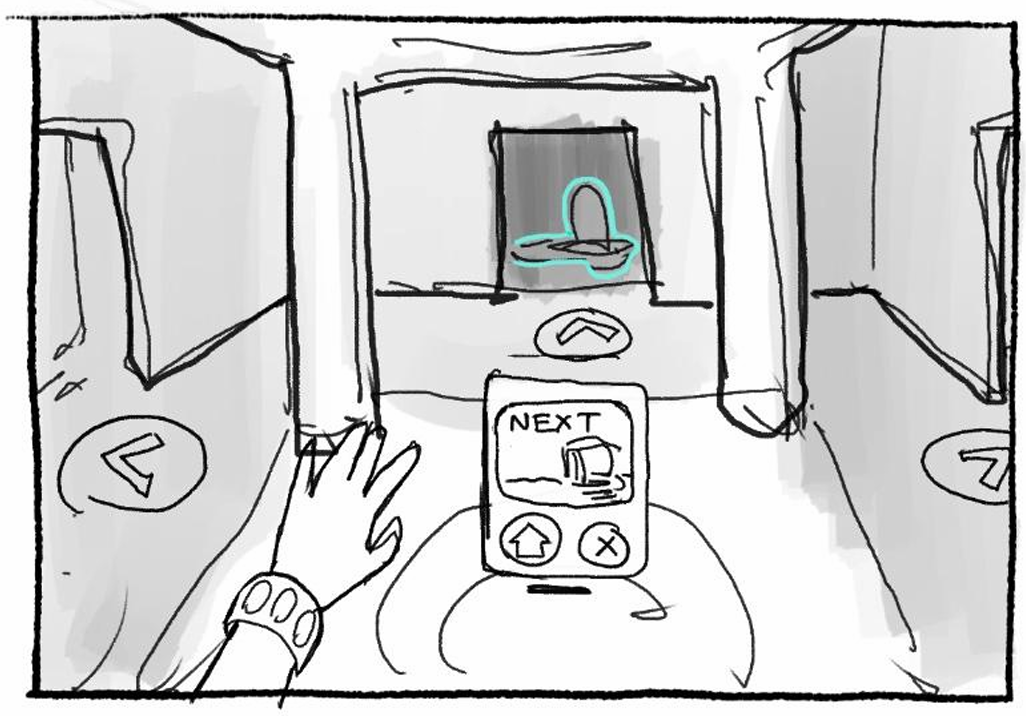
The project follows a research-driven, iterative design process grounded in museum XR practices. The experience balances guided storytelling with exploratory interaction to avoid cognitive overload while preserving curiosity.
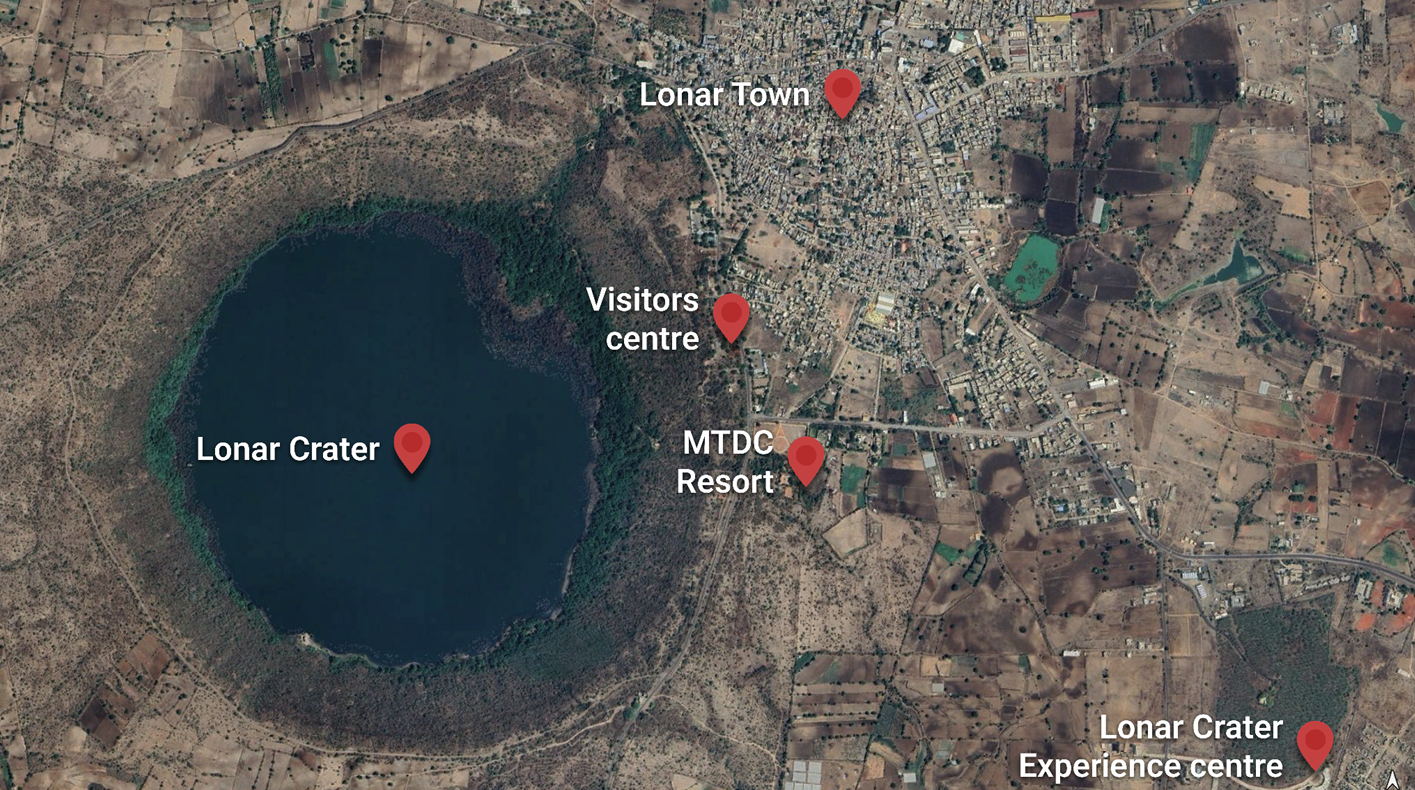
- Field research and site documentation at Lonar Crater
- Study of XR use in museums and science centres
- Identification of audience needs and accessibility constraints
- Ideation across AR, VR, and MR, followed by medium selection
- Prototyping using Unity and OpenXR with a focus on Mixed Reality
- Iterative refinement through expert feedback and usability considerations
Objective
- To demonstrate the potential of Mixed Reality as a public-facing medium for science and heritage communication
- To make Lonar Crater’s geological and cultural narratives more accessible to non-expert audiences
- To create a prototype that can inform future installations for the proposed Lonar Experience Centre.
Outcome
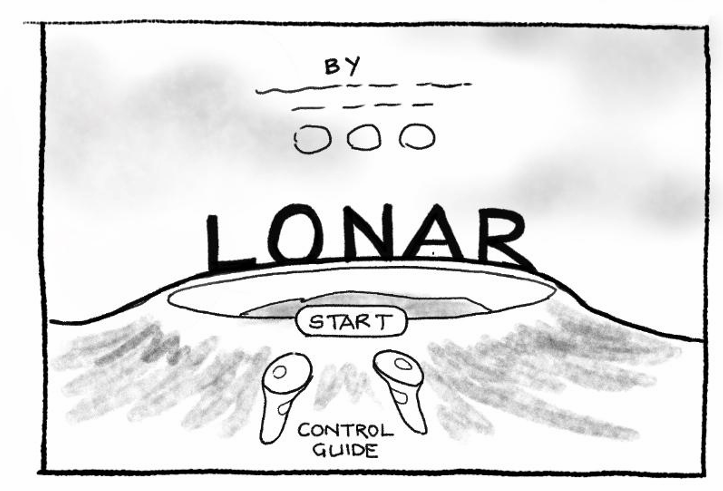
The prototype was evaluated in a controlled setting with users of varying familiarity with XR. These insights reinforced the importance of clarity, pacing, and physical grounding in museum-based XR experiences.
This project demonstrates how Mixed Reality can bridge the gap between scientific research and public engagement without overwhelming users with technological novelty. By combining narrative, spatial exploration, and layered information, this XR experience supports education, conservation, and public curiosity around complex heritage sites.